Patient Education Videos
What is AFib?
In a normal heart, electrical signals travel in an organized way from the top chambers (atria) to the bottom chambers (ventricles), producing a steady, coordinated heartbeat. In atrial fibrillation, the electrical signals in the atria fire rapidly and chaotically, causing the atria to quiver rather than contract properly.
This chaotic activity means the heart cannot pump blood efficiently. Blood can pool in a small pouch called the left atrial appendage (LAA), where it can form clots. If a clot travels to the brain, it causes a stroke.
What are the symptoms?
- Palpitations — a racing, fluttering, or pounding heartbeat
- Shortness of breath, especially with activity
- Fatigue or weakness
- Dizziness or lightheadedness
- Chest discomfort
- Some people have no symptoms at all (silent AFib)
AFib management has two distinct goals
It is important to understand that AFib management has two completely separate components that must each be addressed — and they are managed independently of one another.
Part 1: Stroke Prevention
Because AFib significantly increases stroke risk, reducing that risk is the first priority — regardless of whether you are in AFib or not. Getting out of AFib through cardioversion, medications, or ablation does reduce stroke risk to some degree, but not enough to safely stop anticoagulation. Stroke prevention must be addressed on its own terms.
Blood thinners (anticoagulants)
Blood thinners prevent clots from forming in the LAA and significantly reduce stroke risk. Commonly used anticoagulants include apixaban (Eliquis), rivaroxaban (Xarelto), dabigatran (Pradaxa), and warfarin (Coumadin). For most patients with AFib, anticoagulation is the cornerstone of stroke prevention. The decision to start is based on your individual risk profile — not on whether you feel your AFib or how often it occurs.
LAA Occlusion — Watchman & Amulet
For patients who cannot safely take blood thinners long-term — due to bleeding history, bleeding disorders, high fall risk, or other reasons — the Watchman FLX (Boston Scientific) or Amulet (Abbott) device offers an alternative. These devices are implanted through a catheter and permanently seal off the left atrial appendage, preventing clots from escaping. After the device is confirmed to be covered by tissue (approximately 45 days), anticoagulants can typically be stopped.
Dr. Luni implants both the Watchman FLX and Amulet devices. Stroke prevention in AFib is a critical decision — he will work with you to determine the right approach based on your bleeding risk, lifestyle, and preferences.
Part 2: AFib Rhythm & Rate Management
Separately from stroke prevention, the second goal of AFib management is controlling how the heart behaves in AFib — either by slowing the rate so it is tolerable, or by restoring and maintaining normal rhythm. These are two distinct strategies.
Rate control
Rate control does not stop AFib — it simply slows the ventricular rate so the heart beats more efficiently and symptoms are reduced. Medications such as beta-blockers (metoprolol, atenolol) or calcium channel blockers (diltiazem, verapamil) are commonly used. This is often the first approach in older patients or those with few symptoms.
Rhythm control — restoring normal rhythm
Rhythm control aims to get the heart back into normal sinus rhythm and keep it there. There are several ways to achieve this:
- Antiarrhythmic medications: Drugs such as flecainide, propafenone, sotalol, or amiodarone can suppress AFib and help maintain normal rhythm. They work well in many patients but have side effects and limitations with long-term use.
- Cardioversion (electrical shock): A controlled electrical shock delivered under brief sedation that resets the heart back to normal rhythm. It is quick and effective — but think of it as a band-aid. Cardioversion gets you out of AFib, but it does not keep you out. Without a longer-term strategy — medications or ablation — AFib almost always returns. Cardioversion is best used as a first step or a bridge while a more durable plan is put in place.
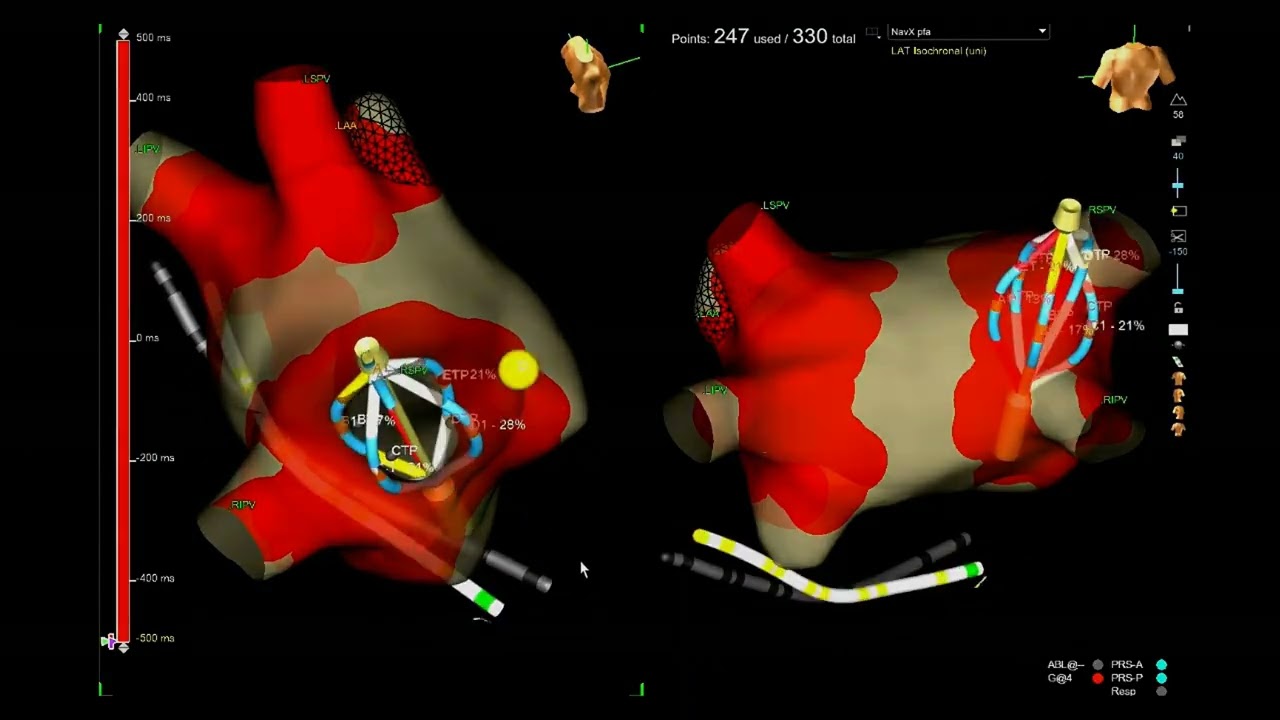
- Catheter ablation: The most durable and effective rhythm control strategy. Ablation targets and eliminates the electrical triggers of AFib — primarily in the pulmonary veins — and offers the best chance of long-term freedom from AFib. Dr. Luni performs catheter ablation including pulsed field ablation (PFA), the newest and most precise ablation technology available.
Factors that improve rhythm control success
Rhythm control — whether with medications or ablation — works better when underlying factors that drive AFib are identified and addressed. AFib is not just an electrical problem; it is often a reflection of broader health issues that, if left unmanaged, make it much harder to keep the heart in normal rhythm.
- Weight loss: Obesity is one of the strongest modifiable risk factors for AFib. Studies consistently show that patients who lose a meaningful amount of weight have significantly higher ablation success rates and lower AFib recurrence. Even a 10% reduction in body weight can make a meaningful difference.
- Sleep apnea treatment: Untreated obstructive sleep apnea is a major driver of AFib recurrence. The repeated oxygen drops and pressure changes during sleep place enormous stress on the heart. If you have symptoms of sleep apnea — snoring, waking unrefreshed, daytime fatigue — a sleep study is an important part of your AFib workup. Treating sleep apnea with CPAP or other therapies significantly improves rhythm control outcomes.
- Thyroid function: Both an overactive thyroid (hyperthyroidism) and, less commonly, an underactive thyroid can trigger or worsen AFib. A simple blood test (TSH) is routinely checked in AFib patients. Thyroid abnormalities should be corrected before or alongside rhythm control strategies.
- Blood pressure control: Poorly controlled hypertension stretches and scars the atria over time, creating the substrate for AFib. Optimizing blood pressure management is an essential part of AFib treatment.
- Alcohol reduction: Even moderate alcohol consumption is associated with higher AFib burden. Reducing or eliminating alcohol can meaningfully reduce AFib episodes.
- Exercise and cardiovascular fitness: Regular moderate exercise improves overall heart health and reduces AFib recurrence. Extreme endurance exercise, however, can paradoxically increase AFib risk — a nuanced conversation worth having with your doctor.
Before pursuing ablation or escalating rhythm control medications, it is worth ensuring that these underlying factors are addressed. The most successful AFib outcomes combine a skilled procedure with a patient who has done the work on lifestyle and risk factor modification.
Rhythm control and stroke prevention are managed separately. Even after successful ablation, anticoagulation decisions are made independently based on your stroke risk — not on whether you feel you are still in AFib.
Preparing for your procedure
If you are scheduled for a catheter ablation or other EP procedure, please review the following instruction pages carefully before your appointment.